Dental implants in Turkey
Dental implants in Turkey And How Do They Work? A Complete Guide to One of the Most Advanced Tooth Replacement Solutions
Losing a tooth may initially seem like a problem limited to a gap in the mouth or a slight change in your smile. But as we explained in previous articles, the effects of tooth loss can extend over time to affect the jawbone, neighboring teeth, chewing function, and bite balance.
That is why many patients look for a solution that helps replace the missing tooth and restore oral function as closely as possible to that of natural teeth.
What Are Dental Implants? And How Do They Work?
One of the most popular treatment options today is dental implants.
But what are dental implants, exactly? Do they simply mean fitting a new tooth inside the mouth? And how can a small piece of titanium become part of the jawbone?
In this guide, we will explain the concept of Dental implants in Turkey
in a simplified way, describe how they work, what they are made of, and why their success depends as much on planning and diagnosis as on the procedure itself.
Why Replacing a Missing Tooth Is About More Than Closing a Gap
When a patient loses a tooth, the first thing they notice is the space it leaves behind.
But the goal of treatment is not limited to filling this gap or improving appearance alone.
A natural tooth performs several functions at the same time, including:
- Contributing to chewing food and distributing chewing forces
- Maintaining the stability of neighboring teeth
- Supporting the opposing tooth in the other jaw
- Transmitting chewing forces to the jawbone through the root, which helps preserve the bone
- Contributing to bite balance and overall oral function
Therefore, when a dentist chooses a method to replace a missing tooth, they don't consider only the outer shape — they aim to restore as many of these functions as possible.
This is where understanding the nature of Dental implants in Türkiye becomes important, and how they differ from simply replacing the visible part of the tooth.
What Are Dental Implants?
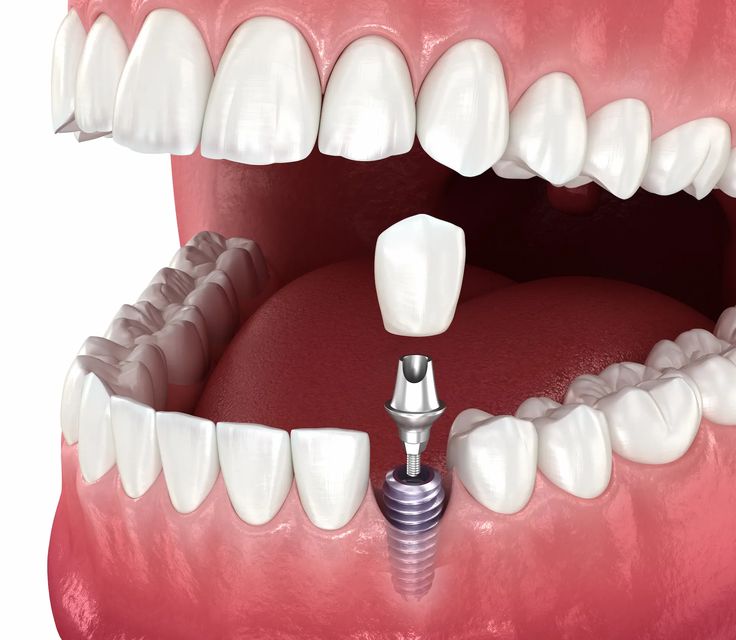
A dental implant is a procedure designed to replace a missing tooth by placing an artificial root inside the jawbone, then fitting a crown that resembles a natural tooth on top of it once treatment is complete.
Unlike some other replacement methods that rely on neighboring teeth, a dental implant functions as an independent unit anchored to the bone itself, which makes it closer in function to a natural tooth.
It's important to clarify that a dental implant doesn't just replace the visible crown — it also replaces the part that once existed within the bone. This is what gives it properties different from those of many other solutions.

What Are Dental Implants Made Of?
To understand how dental implants work, it helps to know their basic components.
1. The Implant
The implant is the part placed inside the jawbone, and it acts as the natural root of the tooth.
It is usually made of titanium or, in some cases, special ceramic materials because these materials have a high degree of biocompatibility with body tissue.
2. The Abutment
After the implant fuses with the bone, a small piece known as the abutment is attached to it.
The abutment serves as a connector between the implant within the bone and the crown that will be visible in the mouth.
3. The Crown
This is the part that resembles a natural tooth and is visible when smiling or chewing.
The crown is designed to match the shape, color, and function of the neighboring teeth, taking into account each patient's bite and chewing pattern.
How Do Dental Implants Work?
To understand how Dental implants in Turkey function, it helps to compare them to a natural tooth.
A natural tooth consists of two parts:
- A visible part inside the mouth, called the crown
- A root inside the jawbone
When a tooth is lost, it's not just the visible part that disappears — the root that once transmitted chewing forces to the bone is lost as well.
Dental implants rebuild this entire system from scratch.
The implant serves as the root, while the artificial crown serves as the visible part of the tooth, helping restore chewing function that closely resembles that of natural teeth.
How Do Dental Implants Fuse with the Jawbone?
One of the most common questions patients ask is:
How does the implant stay fixed inside the jaw?
The answer lies in a natural biological process known as osseointegration.
After the implant is placed in the bone, the body gradually forms a direct bond between the implant surface and the surrounding bone.
During this stage, the bone heals around the implant, which helps stabilize it over time.
Osseointegration is one of the most important factors in the long-term stability of dental implants, provided the case is properly selected and the treatment plan is followed closely.
Why Is Titanium Used in Dental Implants?
Some patients wonder why titanium is used specifically.
This comes down to several key reasons:
- It's highly biocompatible with body tissue
- It can fuse with the jawbone. It's resistance to corrosion inside the mouth
- Its mechanical properties, which allow it to withstand chewing forces
For these reasons, titanium has been used for many years in numerous medical applications — not just dental implants.
Does the Implant Become Part of the Mouth?
Once osseointegration is complete and the final crown is fitted, the implant functions as part of the oral system.
It helps restore chewing function, helps maintain bite stability, and allows the patient to use the implanted tooth as part of their daily routine.
However, a dental implant remains different from a natural tooth in certain biological respects, which is why it requires regular care and consistent follow-up to maintain its health and longevity.
Do Dental implants in Türkiye Look Like Natural Teeth?
Visually, the crowns used in dental implants are designed to blend in with the color, shape, and size of neighboring teeth as closely as possible.
But the success of the aesthetic outcome doesn't depend on the crown alone.
It is also affected by several factors, including:
- The amount of remaining bone
- Gum health
- The location of the missing tooth
- The accuracy of treatment planning
- The quality of execution at every stage of treatment
This is why achieving a natural-looking result doesn't start with placing the artificial tooth; it starts with proper evaluation before treatment even begins.
What Determines the Success of a Dental Implant?
Some patients believe that the success of a dental implant depends solely on the dentist's skill during the procedure or the quality of the implant used.
While both factors matter, treatment success actually begins long before that.
The final result depends on a set of factors that are evaluated before the treatment decision is made and continue throughout every stage of treatment, even after it is complete.
1. Accurate Diagnosis
Every successful treatment plan begins with a full understanding of the case.
This is why the dentist carefully evaluates:
- The cause of tooth loss
- The quantity and quality of the bone
- The health of the gums and surrounding tissue
- The bite pattern and distribution of chewing forces
- The patient's general health
This evaluation helps select the most suitable treatment plan for each case, rather than applying a one-size-fits-all solution.
2. Pre-Treatment Planning
After diagnosis comes the planning stage.
Here, the dentist determines the implant's position, angle, and size to match the available bone, the shape of the jaw, and the location of neighboring teeth.
This planning isn't just meant to make the procedure easier — it aims to achieve the best possible function for the implanted tooth once treatment is complete.
3. Bone Healing Around the Implant
After the implant is placed, the body needs time for osseointegration to be completed.
During this stage, the bone gradually heals around the implant, giving it the stability needed to withstand chewing forces later on.
The duration of this stage varies from person to person, depending on the nature of the case and the treatment plan.
4. Aftercare
Even after a successful implant procedure, daily care remains essential to maintaining results.
This includes:
- Regular tooth brushing
- Using the tools recommended by your dentist to clean around the implant
- Regular dental checkups
- Treating any issue with the gums or neighboring teeth early
An implant cannot develop cavities, but it can be affected by problems in the gums and surrounding tissue if not properly cared for.
Do Dental Implants Last a Lifetime?
One of the most common questions among patients is:
If I get a dental implant, will it last forever?
There isn't a single answer that applies to every case.
A dental implant can last for many years — even decades for many patients — when it is placed following an accurate diagnosis, carried out according to a suitable treatment plan, and maintained with consistent care and regular follow-up.
But its longevity doesn't depend on the implant alone.
It is also affected by factors such as:
- Gum health
- The amount of supporting bone
- Management of chronic conditions
- Daily oral hygiene
- Regular dental checkups
This is why viewing a dental implant as a long-term solution is tied to maintaining overall oral health, not the procedure alone.
What's the Difference Between a Dental Implant and a Natural Tooth?
Although a dental implant aims to restore the function and appearance of a missing tooth, it isn't a biologically identical copy of a natural tooth.
A natural tooth is connected to the bone through fine ligaments that allow it to absorb and sense part of the chewing force.
An implant, on the other hand, connects directly to the jawbone after osseointegration.
Despite this difference, with proper planning and execution, a dental implant can perform chewing functions with high efficiency and provide the patient with a sense of stability and comfort in daily life.
This is why preserving natural teeth remains the first choice whenever possible, while dental implants represent an effective solution when replacing a missing tooth becomes necessary.
Are Dental Implants Suitable for Everyone?
Although dental implants have become one of the most successful tooth replacement solutions, they aren't automatically the right choice for everyone who has lost a tooth.

The treatment decision depends on evaluating a range of factors, such as:
- The amount of remaining bone
- Gum health
- Overall health condition
- Daily habits such as smoking
- The nature of the tooth loss and the goals of treatment
For this reason, whether dental implants are suitable for a specific patient cannot be determined without a clinical diagnosis and appropriate examinations.
We will cover this topic in detail in our next article, "Is Everyone a Candidate for Dental Implants?"
In Conclusion: What Are Dental Implants?
Dental implants in Turkey don't just fill the space left by a missing tooth — they aim to restore the mouth's function and stability by replacing both the root and the visible part of the tooth.
But the success of this treatment doesn't rest on the implant alone. It starts with understanding the case, followed by an accurate diagnosis, proper planning, and the choice of a treatment that matches each patient's needs.
That's why the best dental implant results are never achieved through speed or a one-size-fits-all plan, but through carefully designed treatment that preserves the health and function of the mouth over the long term.
Thinking About Getting a Dental Implant?
If you've lost a tooth and want to know whether a dental implant is right for your case, the first step isn't starting treatment — it's undergoing a comprehensive evaluation of your bone, gums, and bite, and discussing the available options based on an accurate diagnosis.
Frequently Asked Questions About Dental Implants
Is a dental implant the only option for replacing a missing tooth?
No. There are several options for replacing missing teeth, and choosing the right treatment depends on factors such as bone condition, the health of neighboring teeth, and each patient's treatment goals.
How long does a dental implant take?
Treatment duration varies from case to case, depending on the treatment plan, bone healing time, and whether additional procedures — such as bone grafting or gum treatment — are needed before the implant.
Can a dental implant be placed years after losing a tooth?
In many cases, yes — but this depends on the amount of remaining bone and the condition of the mouth at the time of evaluation. That's why a clinical exam and X-rays are the basis for this decision.
Do dental implants look like natural teeth?
With good planning and a crown designed to match the neighboring teeth, the result can look and function very close to natural teeth. However, some biological differences remain between an implant and a natural tooth.
Do dental implants need special care?
Dental implants require daily care similar to that of natural teeth, along with regular follow-up visits with your dentist to maintain the health of the gums and surrounding tissues.
You can contact Dr. Firat directly via WhatsApp regarding all matters related to dental implants: Click here