Dental Implant Lifespan
Dental Implant Lifespan: How Long Can Dental Implants Last?
Dental implants are considered one of the most predictable long-term solutions for replacing missing teeth. However, one of the most common concerns patients have before treatment is how long their dental implants will actually last.
Some patients hear that dental implants last 10 years. Others hear 15 or 20 years. This can create the impression that an implant has a fixed lifespan and must eventually be replaced when it reaches a certain age.
In reality, dental implants do not have a predetermined expiration date.
A well-planned and properly maintained dental implant can remain functional for many years and, in some cases, for decades. Its longevity depends on several factors, including the condition of the bone and surrounding tissues, oral hygiene, biting forces, the quality of the restoration, the patient's habits, and regular professional maintenance.
This means that the more useful question is not simply "How many years does a dental implant last?"
It is:
What determines the long-term stability of a dental implant?
Dental Implant Lifespan: Is There a Fixed Number of Years?
There is no single number that defines the lifespan of every dental implant.
Dental implants are designed to function as long-term tooth replacements. Once an implant successfully integrates with the surrounding bone and the restoration is properly designed, it can remain stable for many years.
However, no responsible dentist can guarantee that every implant will last a lifetime.
Every patient is different. The biological condition of the mouth, the amount and quality of bone, oral hygiene, the forces placed on the implant, smoking, the condition of the surrounding tissues, and the quality of long-term maintenance can all influence the outcome.
Long-term clinical research has demonstrated high survival rates for modern dental implants over 10 years. However, these statistics should not be interpreted as an expiration date.
Ten years is a research follow-up point—not a deadline for replacing an implant.
Some implants may experience complications earlier, while others can continue functioning for decades.
How Long Do Dental Implants Typically Last?
When discussing the average dental implant lifespan, it is important to distinguish between implant survival and the lifespan of the restoration attached to it.
Long-term studies have reported high implant survival rates at 10 years, with systematic reviews showing that a large majority of modern implants remain functional over this period.
Evidence also exists for implants followed for 20 years or longer, showing that favorable long-term outcomes are possible.
But these numbers describe patient populations, not individual guarantees.
Your own implant may have a different outcome depending on your oral health, treatment plan, habits, and maintenance.
For this reason, saying that "dental implants last 10 years" is an oversimplification.
A more accurate statement is:
Dental implants can provide long-term, potentially decades-long function when the biological and mechanical conditions remain favorable and appropriate maintenance is provided.
What Determines Dental Implant Lifespan?
The implant itself does not determine the longevity of an implant.
It depends on the entire treatment process and what happens after treatment.
Accurate Diagnosis and Treatment Planning
Long-term implant success begins before the implant is placed.
A proper evaluation should consider the condition of the bone, gums, remaining teeth, bite, and overall oral function.
This becomes particularly important when a patient has several missing or severely damaged teeth.
In these cases, replacing individual teeth without understanding the overall condition of the mouth may not provide the most stable long-term solution.
The implant should therefore be the result of a carefully designed treatment plan—not the starting point of the plan.
Successful implant treatment begins with diagnosis and planning, not with implant placement.
Bone and Tissue Health
Dental implants rely on the surrounding bone for support.
After a tooth is lost, changes can occur in the bone in that area. The amount and condition of the available bone therefore need to be assessed before implant placement.
The gums and other tissues surrounding the implant are equally important.
An implant may be made from a highly durable material, but its long-term stability still depends on the health of the biological tissues around it.
This is why evaluating the foundation before treatment is an essential part of implant planning. Dental Implant Lifespan
Oral Hygiene
Good oral hygiene remains important after implant treatment.
An implant cannot develop tooth decay in the same way as a natural tooth, but the tissues surrounding it can still become inflamed.
Plaque accumulation around an implant can contribute to inflammation and, in susceptible patients, progressive problems affecting the supporting tissues.
Daily oral hygiene and professional maintenance therefore play an important role in protecting the long-term health of dental implants.
Bite and Chewing Forces
Every time you chew, bite, or clench your teeth, forces are transferred through your teeth and restorations.
If these forces are excessive or poorly distributed, they can place additional stress on the implant-supported restoration.
This is particularly relevant for patients who grind or clench their teeth.
For this reason, evaluating the bite is an important part of comprehensive implant treatment.
The goal is not simply to replace the missing tooth, but to ensure that the new restoration works appropriately within the patient's overall bite and oral function.
Smoking
Smoking can negatively affect the oral environment and may influence implant treatment outcomes.
For patients who smoke, this factor should be discussed as part of the treatment planning process rather than ignored.
Long-term implant care is not only about what happens during surgery. Patient habits can also influence the environment in which the implant needs to function for years.
Restoration Quality
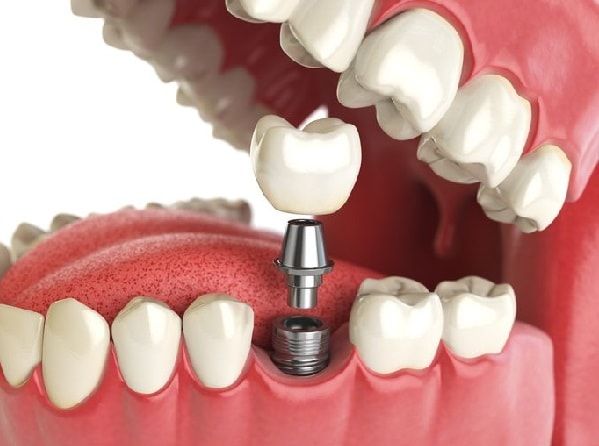
One of the most important distinctions patients should understand is the difference between the implant and the crown.
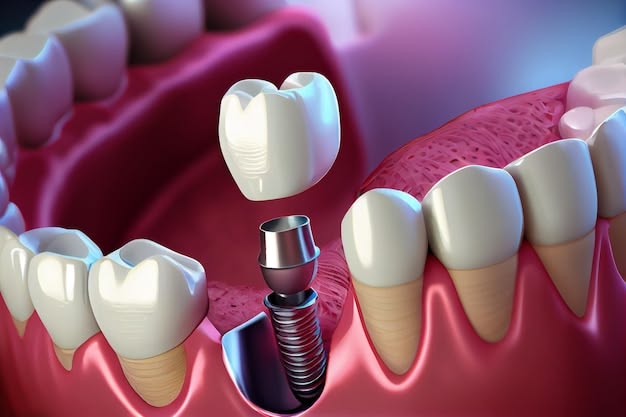
The implant is the artificial tooth root placed into the bone.
The abutment connects the implant to the restoration. Dental Implant Lifespan
The crown or prosthesis is the visible part that replaces the missing tooth or teeth.
These components do not necessarily have the same lifespan.
An implant may remain stable while the crown eventually needs repair, adjustment, or replacement because of wear or other mechanical or aesthetic changes.
Therefore, when someone asks about the age of dental implants, it is important to clarify which part of the treatment they are referring to.
Regular Maintenance and Follow-Up
Implant treatment does not end when the crown is placed.
Regular follow-up allows the dentist to monitor the implant, surrounding tissues, restoration, and bite.
It also provides an opportunity to identify potential problems before they become more complex.
Long-term maintenance is therefore part of the treatment itself.
A successful implant is not simply placed and forgotten. It is maintained over time.
Do Dental Implants Need to Be Replaced?
A dental implant does not automatically need to be replaced after 10 or 15 years.
If the implant remains stable, the surrounding tissues are healthy, and the restoration is functioning properly, there may be no reason to replace the implant simply because it has reached a certain age. Dental Implant Lifespan
However, different complications can occur over time.
For example, the crown may become worn or damaged and require replacement while the implant itself remains stable.
In other situations, problems affecting the surrounding tissues or the implant's stability may require treatment.
The important point is that implant treatment should be evaluated based on its current biological and functional condition—not simply its age.
What Can Cause a Dental Implant to Fail?
Dental implant failure can have several possible causes.
These may include:
- Poor treatment planning
- Insufficient or compromised bone support
- Inflammation around the implant
- Inadequate oral hygiene
- Smoking
- Excessive biting or chewing forces
- Problems with the restoration
- Lack of appropriate maintenance
- Individual biological factors
Not every problem involving an implant means that the implant itself has failed.
Sometimes the problem may involve the crown, abutment, bite, or surrounding tissues and can be treated without removing the implant.
This is why an accurate diagnosis is essential before deciding what needs to be done.
How Can You Help Your Dental Implants Last Longer?
There is no way to guarantee that an implant will last forever.
However, several habits can support long-term implant health.
Maintain Good Oral Hygiene
Brush regularly and clean around the implant and restoration according to your dentist's instructions. Dental Implant Lifespan
Your implant may be artificial, but the tissues around it are still biological tissues that require proper care.
Attend Regular Dental Checkups
Regular examinations allow your dentist to monitor the implant and surrounding tissues and identify changes early.
Follow Your Maintenance Plan
Your maintenance schedule should be based on your individual oral health and risk factors.
Some patients may require closer monitoring than others.
Avoid Smoking
If you smoke, discuss this with your dentist before and after implant treatment.
Report Changes Early
Bleeding, swelling, persistent discomfort, changes in chewing, or movement of the restoration should not be ignored.
Early evaluation can help determine whether the problem is minor or requires treatment.
Manage Excessive Bite Forces
If you grind or clench your teeth, your dentist should be aware.
Managing excessive forces may be an important part of protecting your implant-supported restoration over the long term. Dental Implant Lifespan
Signs That Your Dental Implant May Need Evaluation
A dental implant can function normally for years, but changes around it should be taken seriously.
You should seek a professional evaluation if you notice:
- Bleeding around the implant
- Swelling or redness
- Persistent discomfort
- Changes in your bite
- Difficulty chewing
- A loose crown or restoration
- Movement around the implant
- Changes in the gum tissue around the implant
Importantly, some problems may develop gradually and may not cause significant symptoms at first.
Regular professional examinations therefore remain important even when your implant feels completely normal.
Dental Implant Lifespan and Long-Term Treatment Planning
When discussing how long dental implants last, it is easy to focus only on the implant itself.
But an implant is part of a larger oral system.
If a patient has multiple missing teeth, damaged teeth, an unstable bite, old restorations, or other functional problems, simply replacing one missing tooth may not address the underlying situation.
This is why comprehensive assessment is particularly important in complex cases.
The goal should not be to place an implant as quickly as possible.
The goal should be to understand:
- Why the tooth was lost
- What condition the surrounding bone and tissues are in
- How the missing tooth affects function
- How the implant will interact with the remaining teeth
- What type of restoration is appropriate
- How the result will be maintained over the long term
This approach reflects an important principle in modern implant dentistry:
Function comes before aesthetics, and planning comes before placement.
Frequently Asked Questions About Dental Implant Lifespan
Are dental implants permanent?
Dental implants are designed to be a long-term solution for missing teeth. They can remain functional for many years and potentially for decades, but "permanent" should not be understood as a guarantee that an implant will never experience complications or require treatment.
How long do dental implants last?
The lifespan of a dental implant varies between patients. Modern implants have demonstrated high long-term survival rates, and some can remain functional for decades. Their longevity depends on factors such as treatment planning, bone and tissue health, oral hygiene, bite forces, patient habits, restoration quality, and maintenance.
Can dental implants last a lifetime?
Some dental implants may remain functional for a patient's lifetime, but this cannot be guaranteed for every patient. A more accurate approach is to focus on the factors that support long-term implant stability.
Do dental implants need to be replaced after 10 years?
No. There is no automatic rule requiring a dental implant to be replaced after 10 years. If the implant is stable and healthy, it may continue functioning for much longer.
Does the dental implant last as long as the crown?
Not necessarily. The implant and crown are separate components and may have different lifespans. A crown may require replacement while the underlying implant remains stable.
How can I make my dental implants last longer?
Good oral hygiene, regular dental checkups, professional maintenance, avoiding smoking, managing excessive bite forces, and addressing problems early can all support long-term implant health.
The Bottom Line on Dental Implant Lifespan
No fixed number of years defines the lifespan of every dental implant.
Dental implants are designed to provide a long-term solution, and many can remain functional for decades.
But long-term success does not depend on the implant alone.
It begins with accurate diagnosis and careful planning. It depends on healthy bone and surrounding tissues, appropriate implant placement, a well-designed restoration, balanced function, good oral hygiene, and consistent maintenance.
This is why the right question is not simply:
"How many years will my implant last?"
The more important question is:
"What can we do to give my implant the best possible conditions for long-term stability?"
At the end of the day, successful implant treatment is not about replacing a missing tooth as quickly as possible.
It is about rebuilding function, stability, and a natural result that fits the patient's entire oral system. Dental Implant Lifespan
The goal is not simply to place an implant. The goal is to create a stable result that you can live with confidently for years to come.
If you have any questions, you can contact Dr. Firat directly through the following link: Click here
Read also: