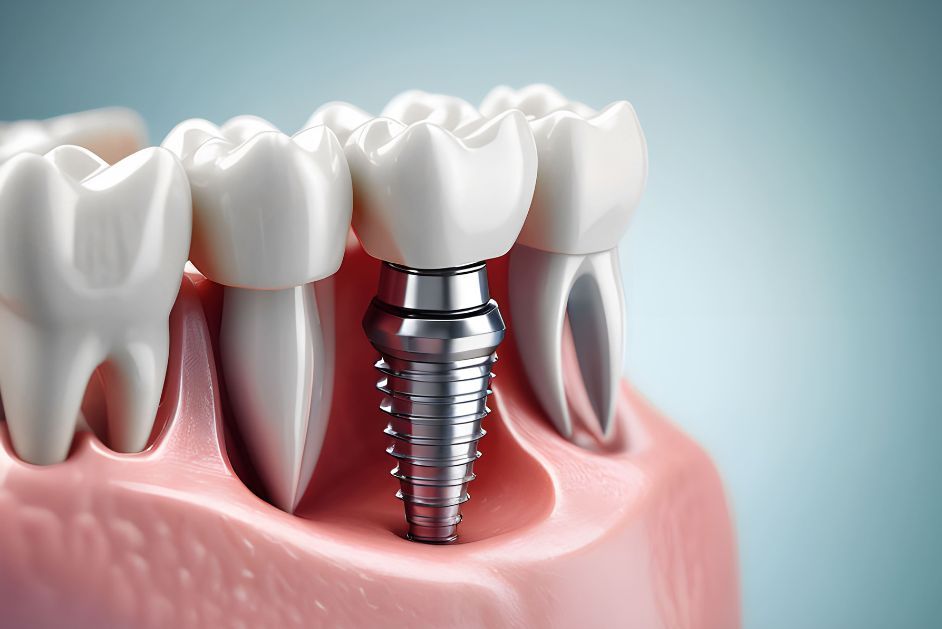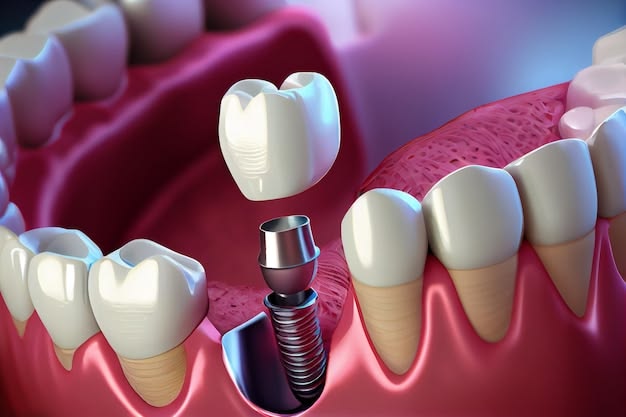
Can You Get Dental Implants Years After Tooth Extraction? When Does Waiting Affect Your Treatment?
If you lost a tooth several years ago, you may now be wondering:
Can you get dental implants years after tooth extraction, or has too much time passed?
This is one of the most common questions patients ask during their consultation—especially those who lost a tooth five, ten, or even twenty years ago.
The good news is that many patients can still receive dental implants successfully, even years after a tooth has been extracted.
However, the answer is not determined by how much time has passed.
Instead, it depends on what has happened to the jawbone and surrounding tissues since the tooth was removed, as well as the findings from a comprehensive clinical examination and three-dimensional imaging.
For this reason, waiting several years doesn't automatically mean dental implant treatment is no longer possible.
It simply means that your dentist must carefully evaluate the current condition of the implant site before recommending the most appropriate treatment plan.
In this article, you'll learn:
Yes. In many cases, dental implants can be successfully placed even years after a tooth has been extracted.
However, no single answer applies to every patient.
Two people may have lost the same tooth ten years ago, yet one may be able to receive an implant immediately. At the same time, the other may require additional procedures before implant placement.
The difference is not the number of years that have passed.
The determining factor is the condition of the bone and soft tissues where the tooth was lost.
That is why you can't determine whether dental implants are possible based only on the time since extraction.
A proper diagnosis always requires a comprehensive clinical examination and radiographic assessment.
Why Doesn't Waiting Several Years Make Dental Implants Impossible?
Many patients believe that delaying treatment for several years automatically means they have lost the opportunity for dental implants.
Fortunately, this is not necessarily true.
After a tooth is extracted, the jawbone naturally begins to change because the tooth root—which previously transmitted chewing forces into the bone—is no longer present.
Without this stimulation, the bone gradually remodels.
However, the rate and extent of these changes vary significantly from one patient to another.
Some patients retain an excellent amount of bone even many years after extraction.
Others may experience more noticeable bone loss within a much shorter period.
For this reason, time alone cannot determine whether implant treatment is still possible.
What Happens to the Jawbone After a Tooth Has Been Missing for Years?
To understand why every patient is different, it helps to know what happens inside the jaw after tooth loss.
The roots of natural teeth do much more than hold teeth in place.
They continuously stimulate the surrounding jawbone during normal chewing.
Once a tooth is removed, this stimulation disappears.
As a result, the jawbone begins a natural remodeling process that may gradually reduce its height and width over time.
These changes are usually most noticeable in the first several months after extraction, then continue at a slower pace.
The amount of bone remodeling varies depending on several factors, including:
Because these factors differ between patients, it is impossible to accurately estimate the remaining bone without proper clinical evaluation and imaging.
Does Bone Loss Mean Dental Implants Are No Longer Possible?
This is one of the biggest misconceptions patients have.
Losing some jawbone does not automatically mean that dental implant treatment is no longer an option.
Instead, it means your dentist needs to answer several important questions before treatment begins:
In some patients, sufficient bone remains for immediate implant placement.
In others, the treatment site may need improvement before implants can be placed safely and predictably.
Once again, the answer comes from diagnosis—not from the number of years since tooth extraction.
Does Everyone Need Bone Grafting After Waiting Several Years?
No.
This is another common misunderstanding.
Many people assume that if a tooth has been missing for years, bone grafting is automatically required before receiving a dental implant.
That simply is not true.
The decision to perform bone grafting is based on the current condition of the implant site—not on how long ago the tooth was extracted.
For example, one patient who lost a tooth eight years ago may still have enough healthy bone for implant placement without grafting.
Another patient who lost a tooth only two years ago may require bone augmentation because of the original reason for extraction, existing bone loss, or individual anatomical factors.
Therefore, every patient should be evaluated individually rather than according to a fixed timeline.
How Does Your Dentist Know If You Need Bone Grafting?
If you're considering dental implants years after tooth extraction, you may naturally wonder whether bone grafting will be necessary.
The answer depends on your examination results.
During your first consultation, your dentist will evaluate several important questions, including:
To answer these questions, your dentist relies on:
This stage is far more than a routine examination.
It forms the foundation of the entire treatment plan.
The information gathered during diagnosis helps determine whether immediate implant placement is possible or whether additional procedures should be performed first to create the most predictable long-term outcome.
Does Waiting Longer Reduce the Success Rate of Dental Implants?
One of the most common concerns patients have is whether delaying treatment for several years automatically reduces the chances of successful dental implant treatment.
The answer is not necessarily.
The success of a dental implant is not determined by how many years have passed since tooth extraction.
Instead, it depends on whether the current biological conditions are favorable for implant placement.
If sufficient bone remains, the gums are healthy, and the treatment is carefully planned, dental implants can achieve excellent long-term results—even many years after tooth loss.
On the other hand, if delaying treatment has resulted in significant bone loss or changes to the surrounding tissues, additional procedures such as bone grafting or other preparatory treatments may be required before implant placement.
For this reason, delaying treatment may sometimes make the process more complex, but it does not automatically mean that the implant will be less successful.
Does Every Patient Need the Same Treatment Plan?
Absolutely not.
This is why an experienced implant dentist does not make treatment decisions based on a single question such as:
"How many years ago was your tooth extracted?"
Instead, they evaluate the entire clinical picture.
When planning dental implants after long-term tooth loss, your dentist considers several important factors, including:
As a result, two patients who lost a tooth the same number of years ago may receive completely different treatment recommendations.
Dental implant treatment is guided by diagnosis—not by the timeline of tooth loss.
When Does Time Become an Important Factor?
Although dental implants can often be placed years after extraction, delaying treatment still has consequences.
The longer a missing tooth is left unreplaced, the greater the possibility of changes such as:
These changes do not occur at the same rate in every patient.
However, they may make treatment planning more complicated than it would have been if the missing tooth had been evaluated earlier.
For this reason, dentists generally do not recommend rushing into implant treatment.
At the same time, they also do not recommend postponing an evaluation without a valid reason.
An early assessment provides more treatment options, even if you don't place implants right away.
What Should You Expect During Your First Consultation?
If you visit your dentist several years after losing a tooth, your first appointment usually isn't about scheduling implant surgery.
The priority is to understand your current oral condition.
A comprehensive implant consultation typically includes:
Following this assessment, your dentist can determine:
This lets you base treatment decisions on objective clinical findings rather than assumptions or how many years have passed since the tooth was lost.
Can You Still Get Dental Implants Years After Tooth Extraction?
In many cases, yes.
Losing a tooth years ago does not automatically mean that dental implant treatment is no longer possible.
What matters most is the current condition of your jawbone, gums, and surrounding oral structures—not simply how much time has passed.
Although delaying treatment may change the jaw, these changes vary considerably between individuals.
Some patients retain enough bone for straightforward implant placement, while others may benefit from additional procedures before treatment.
That is why a comprehensive clinical examination and three-dimensional imaging are essential before making any treatment decisions.
Every patient is unique, and every implant treatment plan should be individualized.
Thinking About Replacing a Tooth You Lost Years Ago?
If you have been living with a missing tooth for several years, the best first step is to schedule a comprehensive implant evaluation.
This assessment allows your dentist to determine:
Rather than assuming that it is "too late" for dental implants, an accurate diagnosis provides the information needed to make the right decision for your individual situation.
Frequently Asked Questions
Can You Get Dental Implants 10 Years After Tooth Extraction?
Yes. In many cases, dental implants can be placed successfully even ten years—or longer—after a tooth has been extracted.
The decision depends on the amount of remaining bone, gum health, and findings from your clinical examination and diagnostic imaging, not the number of years that have passed.
Does Everyone Need Bone Grafting After Losing a Tooth for Years?
No.
Bone grafting is not automatically required simply because a tooth has been missing for a long time.
The need for bone augmentation depends on the quantity and quality of the remaining bone, which only a clinical examination and CBCT imaging can determine.
Are Dental Implants Less Successful After Several Years?
Not necessarily.
If sufficient bone remains and the treatment is properly planned, dental implants can achieve excellent long-term outcomes even many years after tooth extraction.
Some patients may require additional procedures before implant placement, but this does not automatically reduce the likelihood of success.
Can Dental Implants Be Placed If the Jawbone Has Weakened?
In many cases, yes.
If significant bone loss has occurred, procedures such as bone grafting may improve the implant site and create suitable conditions for future implant placement.
The appropriate treatment depends on your individual diagnosis.
Does Waiting Too Long Affect Nearby Teeth?
It can.
Leaving a missing tooth untreated for an extended period may contribute to:
For this reason, an early evaluation is often recommended—even if treatment is planned for later.
The Bottom Line
Many patients assume that losing a tooth years ago means they have missed the opportunity for dental implants.
Fortunately, this is often not the case.
The success of implant treatment depends far more on the current condition of the jawbone and surrounding tissues than on the number of years since extraction.
While delaying treatment may sometimes require additional procedures, it does not automatically prevent successful implant therapy.
The most important step is obtaining an accurate diagnosis.
A comprehensive examination, supported by CBCT imaging and careful treatment planning, allows your dentist to determine whether dental implants are possible and which approach offers the most predictable long-term result.
Ultimately, implant treatment is based on biology—not on the calendar.
If you have any questions, you can contact Dr. Firat directly through the following link: Click here
Read also:
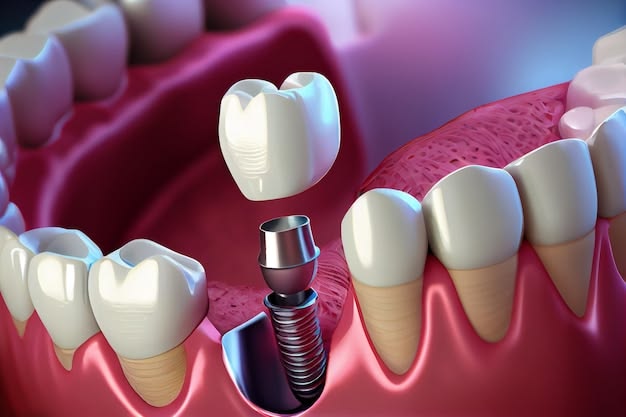
Immediate vs. Traditional Dental Implants: Understanding the Difference
When a tooth needs to be replaced with a dental implant, patients are often presented with different treatment options.
One of the most common questions is whether an immediate dental implant is better than a traditional approach.
The idea of removing a tooth and placing an implant on the same day can sound appealing. It may seem faster, more convenient, and more efficient.
But implant dentistry is not simply about choosing the fastest treatment.
An immediate implant is not automatically better than a traditional implant, and a traditional approach is not necessarily the safer choice for every patient.
The right option depends on the condition of the tooth, the surrounding bone and soft tissues, the presence of infection, the stability that can be achieved at the time of placement, and the overall treatment plan.
The decision should be based on diagnosis—not on speed.
Understanding the difference between immediate and traditional dental implants can help you know why your dentist may recommend one approach over the other.
What Is the Difference Between Immediate and Traditional Dental Implants?
The main difference is when the implant is placed in relation to tooth extraction.
With an immediate dental implant, the implant is placed into the extraction socket during the same appointment in which the tooth is removed.
This means the extraction and implant placement are part of the same surgical procedure.
With a more traditional approach, the tooth is removed first, and the extraction site is allowed to heal before the implant is placed.
The healing period gives the surrounding tissues time to recover and, when necessary, allows additional procedures to be performed to create a suitable foundation for the implant.
Neither approach is universally better.
The appropriate timing depends on the individual clinical situation.
What Is an Immediate Dental Implant?
An immediate dental implant is an implant placed directly after a tooth is extracted.
Instead of waiting for the extraction site to heal completely, the dentist removes the tooth and evaluates the site before placing the implant.
In carefully selected cases, this approach can reduce the number of surgical appointments and shorten certain parts of the overall treatment process.
It may also help preserve the existing architecture of the extraction site when the biological conditions are favorable.
However, immediate placement requires careful case selection.
The fact that an implant can technically be placed immediately does not mean that it should be.
The dentist needs to determine whether the available bone and surrounding tissues can provide the conditions necessary for predictable healing and implant stability.
What Is a Traditional Dental Implant Approach?
In a traditional or delayed implant approach, the tooth is extracted first, and the implant is placed after an appropriate healing period.
The exact timing varies depending on the patient's condition and treatment plan.
In some cases, the dentist may recommend allowing the extraction site to heal before placing the implant. Immediate vs. Traditional Dental Implants
In other cases, additional procedures may be required to improve the bone or soft-tissue foundation before implant placement.
This approach can provide valuable time for the tissues to heal and for the dentist to address conditions that may make immediate placement less suitable.
The longer timeline does not necessarily mean that the treatment is less advanced.
Sometimes, waiting is part of the treatment plan.
When Can an Immediate Dental Implant Be Appropriate?
Immediate implant placement may be considered when the clinical conditions are favorable.
The exact criteria depend on the individual case, but the dentist may evaluate factors such as:
The Condition of the Tooth
The tooth may be severely damaged or non-restorable but still surrounded by a suitable supporting environment.
The reason the tooth needs to be removed matters.
A tooth with extensive infection or other complications may require a different approach from a tooth that is being removed because of severe structural damage without significant infection.
The Condition of the Surrounding Bone
Adequate bone must be available to achieve appropriate implant stability.
The extraction socket and surrounding anatomy need to be carefully evaluated before deciding whether immediate placement is appropriate.
The Health of the Soft Tissues
The gums and surrounding soft tissues contribute to the final result, particularly in visible areas of the smile. Immediate vs. Traditional Dental Implants
The condition and position of these tissues need to be considered when planning immediate implant placement.
The Ability to Achieve Primary Stability
An immediate implant needs to achieve sufficient mechanical stability in the appropriate area of bone.
The extraction socket itself does not automatically provide the ideal conditions for stability.
The dentist must assess the available bone and determine whether the implant can be positioned appropriately and achieve the required stability.
The Overall Treatment Plan
Immediate placement should make sense within the broader restorative plan.
The goal is not simply to insert the implant on the same day as extraction.
The goal is to create a stable foundation for the final restoration.
When Is a Traditional Approach More Appropriate?
There are situations where placing an implant immediately after extraction may not be the best option.
For example, a delayed approach may be considered when:
In these situations, waiting is not necessarily a disadvantage.
It may allow the dentist to create a healthier and more predictable foundation before placing the implant.
A longer treatment timeline can sometimes be the shorter path to a better long-term result.
Does Immediate Implant Placement Mean Faster Treatment?
It can reduce the number of surgical stages in selected cases, but "immediate" does not mean that the entire treatment is completed immediately.
The implant still needs time to integrate with the surrounding bone before it can necessarily be used in the same way as a natural tooth.
In some situations, the patient may receive a temporary restoration, depending on the stability of the implant and the overall treatment plan.
The final restoration is placed according to the healing and functional requirements of the case.
Therefore, immediate implant placement refers primarily to the timing of implant placement after extraction, not necessarily to immediate completion of the entire treatment.
Does Immediate Implant Placement Produce Better Results?
Not automatically.
Immediate and delayed implant placement can both produce successful outcomes when the appropriate approach is selected for the individual patient.
The important question is not:
"Which technique is better?"
It is:
"Which timing is appropriate for this patient's biological and functional conditions?"
The outcome depends on multiple factors, including implant position, bone and soft-tissue conditions, treatment planning, restoration design, oral hygiene, and long-term maintenance.
An immediate implant placed in an unsuitable environment is not better simply because it was placed faster.
Likewise, delaying an implant when immediate placement could have been predictable is not automatically an advantage.
The decision should be based on a clinical assessment rather than a patient's preference for a shorter timeline.
Before recommending immediate placement, the dentist may evaluate:
The Tooth Being Removed
Why is the tooth being extracted?
Is it fractured, severely decayed, infected, or affected by another problem?
The reason for extraction can influence the treatment plan.
The Bone Around the Tooth
The dentist needs to determine whether sufficient bone is available and whether the extraction has affected the supporting structures.
The Soft-Tissue Condition
The thickness, position, and health of the surrounding gum tissue can be particularly important in the aesthetic zone. Immediate vs. Traditional Dental Implants
Infection and Inflammation
The presence and extent of infection or inflammation need to be assessed before deciding on implant timing.
Implant Stability
The dentist needs to determine whether appropriate primary stability can be achieved in the available bone.
Functional Requirements
The implant needs to work within the patient's bite and overall oral function.
Aesthetic Requirements
For teeth that are visible when smiling, the final appearance and preservation of the surrounding tissues become especially important.
The Long-Term Treatment Plan
The dentist should consider not only what can be done today, but how the implant and restoration are expected to function years from now.
This is why the decision cannot be made based solely on how quickly the implant can be placed.
Is Immediate Implant Placement Suitable for Everyone?
No.
Immediate implant placement is a case-dependent treatment option, not a universal solution.
A patient may want an immediate implant because they want to avoid waiting after extraction.
But patient preference alone cannot determine whether immediate placement is biologically appropriate. Immediate vs. Traditional Dental Implants
The dentist needs to determine whether the conditions are suitable.
This is particularly important because an implant is intended to function for many years.
A few weeks or months of additional treatment time may be worthwhile if it allows the dentist to create a more stable foundation.
What Are the Advantages of Immediate Dental Implants?
When the clinical conditions are appropriate, immediate implant placement may offer several potential advantages.
Fewer Surgical Stages
Extraction and implant placement may be performed during the same surgical appointment.
Potentially Shorter Overall Treatment Process
In selected cases, immediate placement can reduce some of the waiting associated with delayed implant placement.
However, healing and osseointegration are still required.
Preservation of the Extraction Site
Immediate implant placement may help support the existing anatomy of the extraction area when the conditions are favorable.
However, placing an implant does not eliminate the biological changes that naturally occur after tooth extraction.
Additional measures may still be necessary to manage the socket and surrounding tissues.
Patient Convenience
Combining procedures into one appointment can be convenient for some patients.
But convenience should remain secondary to biological and functional suitability.
What Are the Advantages of a Traditional Approach?
A delayed or traditional approach can also provide important advantages in selected situations.
Time for Healing
Allowing the extraction site to heal can give tissues time to recover before implant placement. Immediate vs. Traditional Dental Implants
Management of Infection or Inflammation
If the site is compromised, the dentist may first need to address the underlying condition.
Opportunity for Bone or Soft-Tissue Preparation
Some patients may require procedures to improve the foundation before an implant can be placed predictably.
More Controlled Implant Placement
Once the site has healed, the dentist may have a different anatomical situation in which to plan the implant position.
Again, this does not mean that delayed placement is always superior.
It means that the appropriate timing depends on the condition of the site.
Are the Success Rates Different?
The success of immediate and delayed implant placement should not be reduced to a simple comparison of two percentages. Immediate vs. Traditional Dental Implants
Both approaches can achieve high levels of implant survival when they are used appropriately, and the patient is carefully selected.
However, immediate implant placement is more technique-sensitive and depends heavily on favorable local conditions.
The available evidence generally supports immediate placement as a predictable option in appropriately selected cases. Still, outcomes can vary according to the clinical situation, implant location, surgical technique, bone and soft-tissue conditions, and the type of restoration.
This is why a dentist should not recommend immediate placement simply because the technique has a high reported success rate.
The success of a treatment depends on whether it is appropriate for the patient—not only on the technique's success rate in general.
Does Immediate Implant Placement Reduce Bone Loss?
Tooth extraction itself initiates changes in the surrounding bone.
Immediate implant placement may help preserve some aspects of the extraction site, but it does not completely stop the biological remodeling that occurs after tooth removal.
The final preservation of the bone and soft tissues depends on several factors, including the anatomy of the site, surgical technique, implant position, the management of the extraction socket, and the patient's healing response. Immediate vs. Traditional Dental Implants
This is another reason why implant placement should be planned based on the individual anatomy rather than simply following a standard protocol.
Which Is Better: Immediate or Traditional Dental Implants?
There is no universal winner.
Immediate implant placement may be appropriate when the extraction site provides favorable conditions for predictable implant placement and stability.
A traditional or delayed approach may be more appropriate when the tissues need to heal, infection needs to be controlled, bone needs to be augmented, or adequate stability cannot be achieved immediately.
The best option is therefore not necessarily the fastest option.
It is the option that provides the most appropriate biological and functional conditions for the individual patient.
Why Diagnosis Matters More Than Speed
Patients naturally want treatment to be as simple and fast as possible.
That is understandable.
But dental implant treatment is intended to provide a long-term solution.
Choosing a treatment simply because it reduces the waiting period can be the wrong priority if the biological conditions are not favorable.
A proper diagnosis allows the dentist to answer questions such as:
Only after answering these questions can the appropriate implant timing be selected.
The patient's mouth determines the timing—not the calendar.
Frequently Asked Questions About Immediate and Traditional Dental Implants
What is the difference between immediate and traditional dental implants?
The main difference is the timing of implant placement. An immediate implant is placed during the same appointment as tooth extraction, while a traditional or delayed approach involves allowing the extraction site to heal before implant placement. Immediate vs. Traditional Dental Implants
Is immediate dental implant placement better?
Not necessarily. Immediate placement can be an excellent option for appropriately selected patients, but it is not suitable for every case. The decision depends on the condition of the bone, soft tissues, infection status, implant stability, and overall treatment plan.
Is immediate implant placement faster?
It can reduce some stages of treatment because the implant is placed at the time of extraction. However, the implant still needs time to integrate with the bone, and the final restoration is not necessarily completed immediately.
Can an infected tooth receive an immediate dental implant?
It depends on the type and extent of the infection and the condition of the surrounding tissues. The infection should be carefully evaluated before deciding on immediate implant placement. In some cases, treating the infection and allowing the site to heal first may be more appropriate.
Are immediate dental implants as successful as traditional implants?
Both immediate and delayed implant placement can have predictable outcomes when used in appropriately selected cases. However, the outcome depends on factors such as bone and soft-tissue conditions, implant stability, surgical technique, restoration, and maintenance.
How does a dentist decide between immediate and traditional implants?
The decision is based on a comprehensive assessment of the tooth, bone, soft tissues, infection status, available implant stability, bite, aesthetic requirements, and overall treatment plan.
Does immediate implant placement prevent bone loss?
No. Tooth extraction naturally causes changes in the surrounding bone, and immediate implant placement does not completely prevent this remodeling. Additional measures may sometimes be needed to preserve or rebuild the extraction site.
Can every extracted tooth be replaced with an immediate implant?
No. Immediate implant placement is not suitable for every extraction site. The dentist needs to evaluate whether the biological and mechanical conditions are appropriate.
The Bottom Line: The Right Implant Timing Depends on the Patient
The difference between immediate and traditional dental implants is primarily about timing—but choosing the right timing is a clinical decision.
Immediate placement can offer convenience and may be an excellent option when the extraction site has favorable conditions.
A delayed approach can be more appropriate when the bone or soft tissues need time to heal, infection needs to be managed, or additional preparation is required. Immediate vs. Traditional Dental Implants
Neither approach should be chosen simply because it sounds faster or more convenient.
The objective is not to place the implant as soon as possible. The objective is to place it when the conditions are right.
A few additional weeks or months of treatment may sometimes create a healthier foundation for a result that needs to function for many years.
That is why good implant dentistry starts with diagnosis.
The dentist's role is not simply to offer the patient the fastest option.
It is to evaluate the biological and functional conditions, explain the available alternatives, and choose the approach that offers the most appropriate long-term solution for that individual patient.
In implant dentistry, the best treatment is not always the fastest one. It is the one that is right for your biology, your function, and your long-term oral health.
If you have any questions, you can contact Dr. Firat directly through the following link: Click here.
Read also:
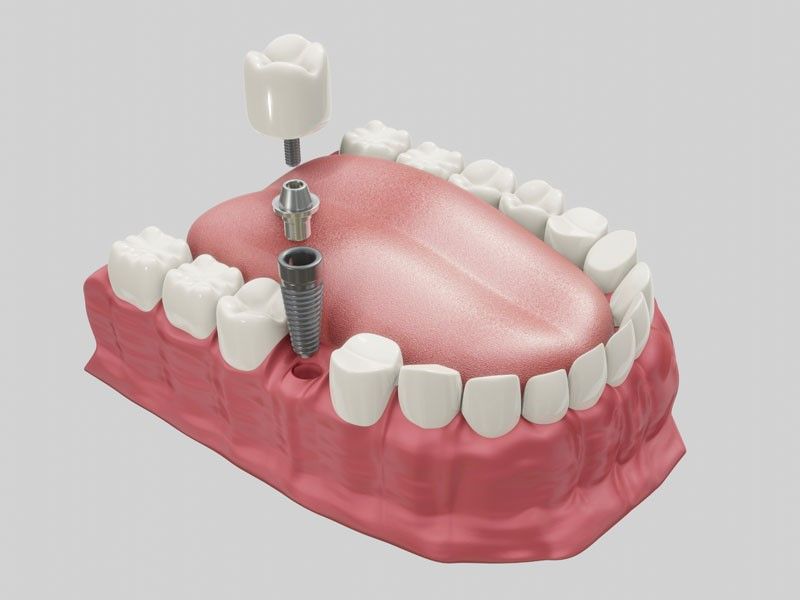
Dental Implant Success Rate: What Determines Long-Term Success?
Dental implants have become one of the most predictable treatment options for replacing missing teeth. Their high long-term survival rates have made them an important part of modern restorative and implant dentistry.
But when patients search for the dental implant success rate, they often expect one simple number.
You may see figures such as 90%, 95%, or even higher. While these numbers can be useful, they do not tell the whole story.
A dental implant does not succeed simply because a high-quality implant was used.
Its outcome depends on the patient's bone and tissue health, the diagnosis, treatment planning, surgical technique, oral hygiene, bite, overall oral condition, and long-term maintenance.
For example, a systematic review of contemporary dental implants reported a 96.4% implant-level survival rate at 10 years in its primary analysis. When the researchers accounted more conservatively for missing follow-up data, the estimated survival was 93.2%.
Another systematic review that included studies with at least 10 years of follow-up reported a cumulative mean implant survival rate of 94.6%.
These results demonstrate that dental implants can be highly predictable.
But they also highlight an important point:
A success rate is a population statistic. It is not a guarantee for an individual patient.
Understanding what influences success is therefore just as important as knowing the percentage.
Are Dental Implants Successful?
Yes. Dental implants have high long-term survival rates and are considered a predictable treatment option for replacing missing teeth.
Long-term research consistently demonstrates favorable outcomes for modern implant therapy. In one systematic review of contemporary implant systems, the estimated 10-year implant survival was 96.4% in the conventional analysis.
However, it is important to distinguish between implant survival and complete treatment success.
An implant can remain in place while a patient experiences a biological or technical complication involving the surrounding tissues or the restoration.
For example, a patient may experience:
This does not necessarily mean that the implant itself has failed.
Therefore, when discussing dental implant success, dentists should look beyond a single number and evaluate the entire treatment outcome.
The real objective is not simply for the implant to remain inside the bone.
The objective is a stable, healthy, functional, comfortable, and natural-looking result.
What Is the Dental Implant Success Rate?
There is no single success rate that applies to every implant, every patient, and every clinical situation.
Long-term studies have reported implant survival rates in the mid-90% range and above, depending on the implant system, patient population, treatment type, follow-up period, and definition of success or survival used by the researchers.
One systematic review of contemporary implant systems found a 10-year survival estimate of 96.4%. The same study emphasized that more conservative analysis can produce lower estimates, illustrating why statistics should be interpreted carefully.
This distinction matters when speaking with patients.
A statement such as "dental implants have a 95% success rate" can create a false sense of certainty if the patient assumes that their individual chance of success is automatically 95%.
Your personal prognosis depends on your specific clinical situation.
The same implant placed in two different patients does not necessarily have the same prognosis.
What Increases the Chances of Dental Implant Success?
Several factors can improve the conditions necessary for long-term implant stability.
1. Accurate Diagnosis
The first factor in successful implant treatment is understanding the patient's oral condition before treatment begins.
A dentist needs to evaluate more than the missing tooth.
The assessment may include:
This information helps determine whether an implant is appropriate and, if so, how it should be planned. Dental Implant Success Rate
A missing tooth may look like an isolated problem, but the surrounding oral system may tell a different story.
The quality of the diagnosis determines the quality of the treatment plan.
2. Careful Treatment Planning
Dental implant placement should not be treated as a simple surgical procedure.
The dentist needs to determine where the implant should be positioned, how it will interact with the surrounding structures, what type of restoration will be used, and how the final result will function.
This becomes even more important in complex cases involving several missing or damaged teeth.
A quick decision to place an implant does not necessarily create a long-term solution.
Good planning considers not only where the missing tooth is today, but also how the restoration needs to function years from now.
3. Healthy Bone and Supporting Tissues
A dental implant needs adequate biological support.
The condition and volume of the available bone are therefore important considerations before implant placement. Dental Implant Success Rate
The tissues surrounding the implant also need to remain healthy after treatment.
Inflammation around implants can affect the supporting tissues and may progress to more serious peri-implant disease.
Recent evidence has identified several factors associated with peri-implant diseases, including a history of periodontitis and smoking.
This is why implant treatment should not focus exclusively on the implant itself.
The environment around the implant matters.
4. Good Oral Hygiene
Long-term implant success requires ongoing attention to oral hygiene.
Although an implant-supported crown cannot develop tooth decay in the same way as a natural tooth, plaque and inflammation can still affect the tissues surrounding the implant.
Patients therefore need an appropriate daily hygiene routine and professional follow-up. Dental Implant Success Rate
The goal is not simply to keep the artificial tooth clean.
It is to maintain the health of the tissues that support the implant.
5. Appropriate Management of the Bite
The forces generated during chewing and clenching can influence the mechanical environment around an implant-supported restoration.
For patients who grind or clench their teeth, this should be considered during treatment planning and follow-up.
A successful restoration needs to work within the patient's overall bite rather than functioning as an isolated replacement tooth.
This is particularly important when several teeth are missing or when a patient has significant changes in their bite.
6. Avoiding or Managing Smoking
Smoking is one of the patient-related factors that has been consistently associated with poorer implant outcomes.
A 2024 systematic review and meta-analysis found that smoking was associated with a significantly increased risk of early dental implant failure, with an odds ratio of 2.59 compared with non-smoking in the implant-level analysis.
A 2026 systematic review also found reduced implant survival among cigarette smokers and increased crestal bone loss, with most included studies reporting a higher incidence of peri-implantitis among smokers.
This does not mean that every smoker will experience implant failure.
It means smoking is a relevant risk factor that should be discussed honestly when planning treatment.
7. Regular Maintenance
Implant treatment does not end when the crown is placed.
Regular professional follow-up allows the dentist to monitor:
Early detection can make it possible to manage problems before they become more advanced. Dental Implant Success Rate
Long-term success needs to be maintained, not simply achieved on the day of surgery.
What Can Reduce the Dental Implant Success Rate?
The factors that reduce the likelihood of successful treatment are not limited to surgical complications.
Some are related to the biological environment, while others involve patient habits, mechanical forces, or inadequate long-term maintenance.
Smoking
As discussed above, smoking is associated with increased implant failure risk and peri-implant complications.
Untreated Periodontal Disease
A history of periodontal disease is an important factor when evaluating the health of tissues around dental implants.
The 2025 AO/AAP systematic review and meta-analysis identified periodontitis as a significant risk indicator for peri-implant diseases.
This is why treating and stabilizing periodontal problems before implant placement can be an important part of comprehensive treatment planning.
Poor Oral Hygiene
Persistent plaque accumulation can contribute to inflammation around implants and increase the risk of peri-implant complications.
Excessive Mechanical Forces
Bruxism, an unstable bite, or excessive loading can create additional mechanical stress on implant-supported restorations. Dental Implant Success Rate
Inadequate Treatment Planning
An implant may be technically placed but still be part of an inadequate overall treatment plan.
This can happen when the focus is limited to replacing the missing tooth without considering the patient's bite, surrounding teeth, bone, soft tissues, or long-term function.
Lack of Follow-Up
Even a well-placed implant needs long-term monitoring.
Ignoring changes such as bleeding, swelling, discomfort, or changes in the restoration can allow a developing problem to progress.
Why Diagnosis Matters Before Implant Placement
One of the most important factors in dental implant success is something that happens before the implant is ever placed:
Diagnosis.
A successful treatment plan starts by understanding the patient's current condition.
For a single missing tooth, the dentist may need to evaluate the local bone and tissues and how the implant will interact with the neighboring teeth.
For a patient with multiple missing or damaged teeth, the situation can be more complex. Dental Implant Success Rate
The dentist may need to consider the overall bite, remaining teeth, bone levels, periodontal condition, and the relationship between function and aesthetics.
This is why two patients who both "need an implant" may require completely different treatment plans.
The implant itself is only one component.
The diagnosis determines whether, where, when, and how the implant should be used.
Does a High-Quality Implant Guarantee Success?
No.
Choosing a high-quality implant system is important, but the implant alone does not determine the outcome.
The success of treatment depends on the interaction between:
A high-quality implant placed in an unsuitable environment or without appropriate planning cannot eliminate biological and mechanical risks.
This is why the focus should be on the quality of the entire treatment, not simply the brand or type of implant.
What Happens After a Dental Implant Is Placed?
Successful implant treatment continues after surgery.
During the healing period, the implant needs to integrate with the surrounding bone.
Once the implant is ready to support the restoration, the next stage focuses on creating a functional and appropriate replacement tooth.
After the final restoration is delivered, maintenance becomes part of the long-term plan.
This is an important distinction between a short-term procedure and comprehensive implant treatment.
The goal is not:
Place the implant - attach a crown - finish.
The goal is:
Diagnose - plan - place - restore - monitor - maintain.
Each stage contributes to the long-term outcome.
How Can You Improve Your Chances of Successful Dental Implants?
Patients also have an important role in the outcome of their treatment.
You can support your implant health by:
The goal is not to create unnecessary anxiety around implant treatment.
It is to give patients realistic expectations and a clear understanding of what they can do to protect their results. Dental Implant Success Rate
Dental Implant Success Is More Than a Percentage
When patients search for the success rate of dental implants, they are often trying to answer a deeper question:
"Can I trust this treatment?"
The scientific evidence provides a reassuring answer: modern dental implants have high long-term survival rates.
But a percentage alone cannot tell you whether an implant is the right solution for your particular mouth.
Your prognosis depends on the condition of your bone and tissues, the health of your remaining teeth, your bite, your habits, the complexity of the case, the treatment plan, and the quality of your long-term maintenance.
This is why a responsible implant consultation should not begin with a promise of success.
It should begin with an evaluation.
Frequently Asked Questions About Dental Implant Success
Is dental implant treatment successful?
Yes. Dental implants have demonstrated high survival rates in long-term clinical studies and are considered a predictable treatment option for replacing missing teeth. However, individual outcomes vary depending on biological, mechanical, and patient-related factors.
What is the success rate of dental implants?
Long-term studies commonly report implant survival rates in the mid-90% range or higher. One systematic review of contemporary implant systems estimated 96.4% survival at 10 years in its primary analysis.
However, this is a population-level statistic and should not be interpreted as an individual guarantee.
What are the main factors affecting dental implant success?
Important factors include accurate diagnosis, appropriate treatment planning, healthy bone and surrounding tissues, good oral hygiene, periodontal health, controlled biting forces, smoking status, restoration quality, and regular professional maintenance.
Does smoking affect dental implant success?
Yes. Research has associated smoking with an increased risk of implant failure and peri-implant complications. A 2024 meta-analysis found a significantly higher risk of early implant failure among smokers.
Can dental implants fail even when the implant is high quality?
Yes. Implant quality is only one part of the treatment. The patient's biological condition, treatment planning, placement, restoration, oral hygiene, bite, and maintenance can all influence the outcome.
Does periodontal disease affect dental implant success?
A history of periodontal disease is an important risk consideration. Recent evidence identifies periodontitis as a significant risk indicator for peri-implant disease.
How important is follow-up after dental implant treatment?
Follow-up is an essential part of long-term implant care. It allows the dentist to monitor the implant, surrounding tissues, restoration, and bite and to identify potential problems at an earlier stage.
The Bottom Line on Dental Implant Success
The dental implant success rate is high, but the percentage alone does not determine whether an individual treatment will succeed.
Modern implants can provide predictable and long-term results, but successful treatment depends on much more than placing an implant into the jaw.
It starts with understanding the patient's condition.
It continues with accurate diagnosis and careful planning.
It requires appropriate surgical and restorative treatment.
And it continues for years through oral hygiene, professional maintenance, and regular follow-up.
This is why the most important factor in dental implant success is not simply choosing an implant.
It is choosing the right treatment plan for the right patient at the right time.
A good implant treatment should not begin by asking, How quickly can we place the implant?
It should begin by asking:
What does this patient actually need to achieve a healthy, functional, stable, and natural result?
That is the difference between simply replacing a missing tooth and truly rebuilding the oral system.
If you have any questions, you can contact Dr. Firat directly through the following link: Click here
Read also:
Your next step
Articles can inform you, but treatment decisions should begin with an individual clinical assessment.